
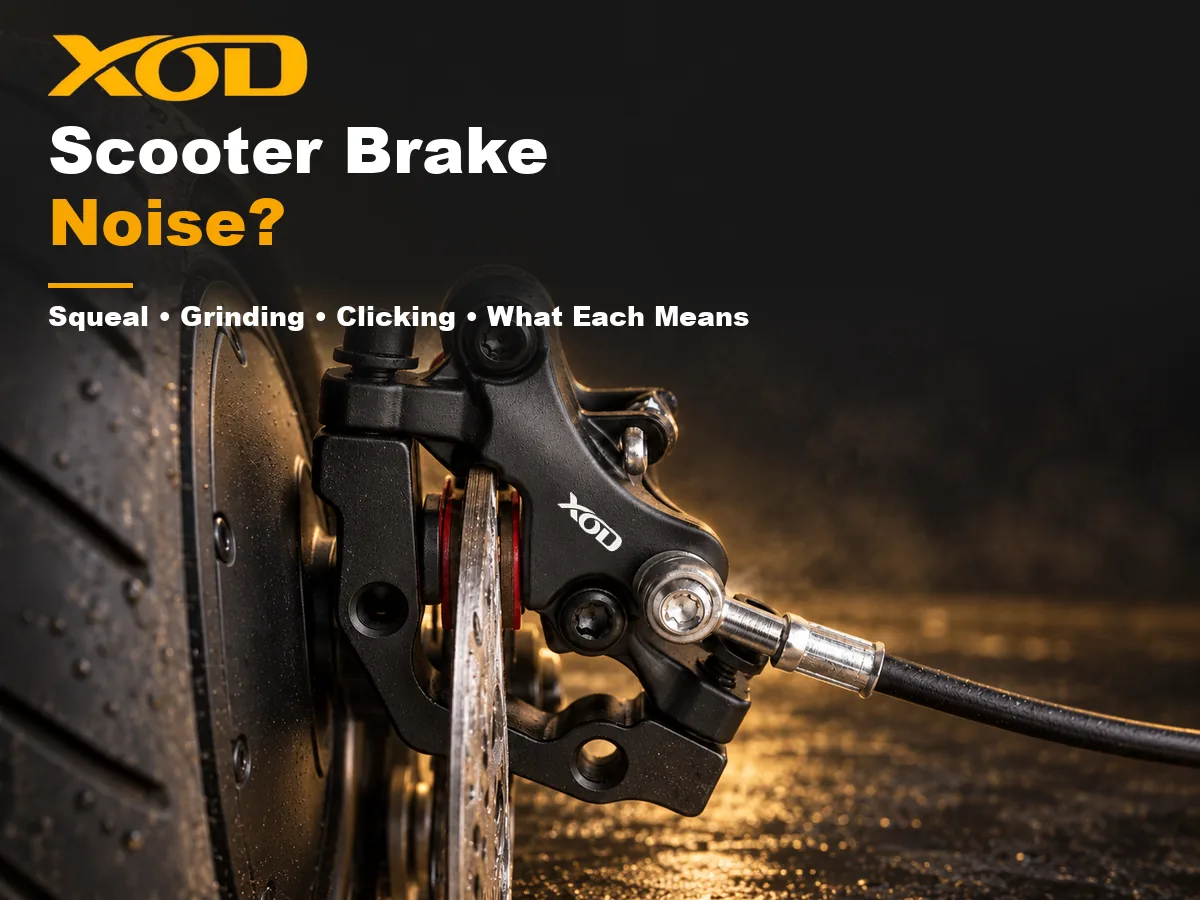
Your scooter brake squeals, grinds or ticks, and you want to know if it is harmless or a fault. Different sounds point to different causes. This guide helps you match the sound to the cause, decide whether to keep riding, and fix the common problems without making the brake worse.
What riders often ask
- I cleaned the pads and the rear brake still squeals. What now?
- Is some noise normal after fitting new brakes or new pads?
- The metal sound only appears when I ride, and the wheel spins quietly on a stand. Why?
- Can I use a spray or some grease to quiet the brake?
Jump to a section
When to stop riding Sound guide New brakes and pads Contamination and glazing Pad type and noise Is it the brake? XOD owners FAQWhen should I stop riding because of brake noise?
Stop riding if you hear grinding, feel the lever pulse, or see signs of fluid or oil on the brake. These point to metal contact, a damaged rotor or contamination, and the brake may not stop you as it should.
Stop riding if: you hear grinding or a metal-on-metal sound; the lever pulses as you brake; the pads are worn down to the metal backing plate; there is oil or brake fluid on the pads, rotor or caliper; there is a leak or the lever loses pressure; or a new noise starts after a fall or crash.
Check pad thickness against your brake maker's minimum, because that number depends on the manufacturer. If you cannot find the cause, or the brake looks damaged, take the scooter to an experienced mechanic before you ride it again. A bent rotor is one common cause of pulsing, and the rotor wear, warp and replacement guide shows how to check it.
What does each brake sound mean?
The sound, plus the moment it happens, narrows down the cause quickly. Use the table below, then follow the matching section.
| Sound | When it happens | Likely cause | What to do |
|---|---|---|---|
| High squeal | While braking, dry or wet | Dirty or contaminated rotor or pads, glazed pads, pad type, poor bed-in | Clean the rotor, inspect the pads, then read the sections below |
| Squeal only when wet | First stops after rain or puddles | Water or dirt on the rotor | Brake gently to dry the rotor and wipe it clean. If it stays after drying, treat it as contamination |
| Grinding | While braking, sometimes constant | Worn-out pads or debris between pad and rotor | Stop riding. Inspect pads and rotor |
| Tick or scrape once per wheel turn | Rolling or braking | Bent rotor or caliper out of alignment | Spin the wheel and watch the gap. See the rotor wear guide |
| Constant whirr or drag | Rolling with the lever released | Pad touching the rotor all the time | Follow the rotor rubbing fix |
| Rattle | Over bumps | Loose pad, pin or bolt | Check pad retention and bolts. Tighten to your manufacturer's torque specification |
One more point. According to Wikipedia's disc brake article, most squeal comes from vibration (resonance) of the pads and disc, and this type of squeal should not reduce stopping performance. That is useful background. It is not a reason to ignore the noise on a scooter, because contamination and wear produce a similar sound. Rule out those causes first.
Is noise normal on new brakes or new pads?
Yes, some noise during the first rides is common. New pads and rotors need a bedding-in period before they run smoothly.
Bedding-in spreads a thin, even layer of pad material over the rotor. SRAM's troubleshooting guide says a poor bed-in can leave uneven pad material on the rotor, and that this can cause persistent noise. The FAQ on our Ausom kit page also says new pads may make some noise during the initial break-in.
A safe bed-in routine
Our KuKirin install guide separates hydraulic faults from pad bedding-in. Check for leaks, lever pressure, contamination and alignment before deciding whether bedding-in is appropriate. The SRAM procedure below is for bicycles; it is not a universal XOD scooter routine.
- Choose a flat, quiet place away from traffic and pedestrians.
- At moderate speed, brake firmly down to walking speed. SRAM suggests about 20 repeats.
- Then, only if you stay fully in control, repeat at a somewhat higher speed down to walking speed. SRAM suggests about 10 repeats. Our manual advises against relying on maximum braking force immediately after installation.
- Stay balanced and never lock the wheel.
- Let the brakes cool before further riding.
If the noise is still there after a proper bed-in, move on to contamination. Do not try to hide it with a spray.
How do contamination and glazing cause squeal?
Oil, grease or cleaning products on the pads or rotor cause squeal and weaker braking. The usual fix is to clean the rotor and replace pads that are contaminated.
Contamination gets onto the braking surfaces in a few ways: oil left after a bleed, skin oil from fingers, chain lube, spray cleaners or lubricants. SRAM's pad overview warns against touching braking surfaces for this reason. If you recently bled the brake, our bleeding guide explains how to keep oil off the pads and rotor. Glazing is a hardened, shiny pad surface that grips unevenly and often squeals.
What to do
- Wipe the rotor with isopropyl alcohol and let it dry. SRAM says water or dirt on the rotor can cause noise that this cleaning removes.
- Inspect the pads. Shiny, hard-looking or oily pads are a warning sign.
- If the noise continues, SRAM advises replacing the pads and rotors and following the bed-in process carefully.
This also answers the rider who cleaned the pads and still hears a squeal. Wiping the surface rarely removes oil that has soaked into the pad material, so a squeal that returns usually means new pads. If the rotor is contaminated, glazed or bent, replace it too. XOD rotors come in several diameters and thicknesses; match your original rotor and confirm the thickness your caliper accepts.
Do not spray anything on the brake. Lubricants, grease, "quiet" sprays and anti-squeal compounds on the pads or rotor reduce grip and can leave you with a brake that squeals and stops poorly.
Pads and rotors are wear items. Our XOD warranty policy does not cover damage caused by contamination, so keep oil and grease away from them.

If your pads are contaminated or glazed, fresh pads in the right shape for your caliper are the usual fix.
- Carbon-ceramic, copper-based and full-sintered compounds
- Scooter-dedicated pads, with cooling fins on select models
- Match your caliper's pad shape before ordering
Does pad type change how loud the brakes are?
Yes. Sintered (metal) pads tend to be louder than organic (resin) pads, and the compound you choose changes how much noise to expect.
SRAM's pad overview says sintered pads tend to be louder and need a more thorough bed-in, while organic pads make less noise and bed in faster. Our carbon-ceramic pads are designed for excellent initial bite and extremely quiet running. Our full-sintered pads are designed as heavy-duty pads for high temperatures and for wet or muddy conditions. So the quieter choice is not always the right one for hard use.
If you switch compound, SRAM says you will also need to replace the rotors. Old pad material left on the rotor can make the new pads noisy. The scooter brake pads guide covers choosing and replacing pads in more detail.
How do I tell if the noise is not from the brake?
Lift the wheel and spin it by hand with the lever released, then pull the lever gently while it spins. If the noise changes only when you pull the lever, it is the brake. If it stays the same, first check whether a pad is rubbing the rotor with the lever released, then look at the tyre, bearings, motor or fender.
If the metal sound only appears when you ride, the load matters. Your weight and bumps flex parts that sit still on a stand. Check that the caliper bolts, rotor bolts and axle nuts are tight, using your manufacturer's torque values, and look for a pad or part that moves under load. If you cannot find it, have a mechanic check it.
Noise after puddles or light rain is often water on the rotor, which dries after a few gentle stops. Our FAQ for the Ausom and Joyor kits describes the brake as sealed for normal riding. It says to avoid deep water, pressure washing and long immersion, and to always check braking performance after a wet ride. A wheel or fender that picked up grit can also sound like a brake. Spin the wheel and listen before you take anything apart.
What should XOD brake owners check?
Start with the troubleshooting rows in the XOD hydraulic brake user manual. They match the causes in this guide.
For squeal, our manual lists a contaminated rotor or pads, glazing or an alignment issue. The fix is to clean the rotor and inspect or replace contaminated pads. For constant rotor rubbing, it lists caliper misalignment, rotor position or wheel and hub offset. You re-centre the caliper and check the rotor and spacer requirements. A rotor spacer is not a universal fix for rubbing, so read the rotor rubbing guide before you add one. Our manual also says to keep mineral oil, grease and contaminants away from the pads and rotor, and that new pads and rotors need a bedding-in period.
If the noise stays after cleaning and bed-in, send us a short video of the sound plus photos of the pads and rotor. A clear look at both usually tells more than a written description.
Brake noise FAQ
Why do my new scooter brakes squeal?
New pads and rotors need a bedding-in period, and some noise during it is common. Follow your brake maker's bed-in method on a safe, flat area. If the squeal stays, check for contamination on the pads or rotor.
Can I spray something on squeaky brakes?
No. Lubricants, grease and anti-squeal sprays on the rotor or pads reduce grip. Clean the rotor with isopropyl alcohol and replace contaminated pads instead.
Why do my brakes squeak after rain?
Water or dirt on the rotor can cause temporary noise. Brake gently to dry it, or wipe the rotor clean. If the squeal stays once the brake is dry, look for contamination or glazed pads.
Is brake squeal dangerous?
Squeal from pad and disc vibration need not reduce stopping power. But you cannot tell that by ear, because contamination and wear sound similar. Check the pads and rotor, and stop riding if the noise turns to grinding or the lever pulses.
Why does my brake grind?
Grinding can mean the pads are worn down to the backing plate, or that debris is caught between pad and rotor. Stop riding and inspect the pads and rotor. Replace worn pads, and have a mechanic look at any damaged rotor.
Will sintered pads be louder?
Often, yes. SRAM says sintered pads tend to be louder and need a more thorough bed-in than organic pads. Sintered pads can suit hot or wet conditions better, so choose by how you ride as well as noise.
Why does my brake click once every wheel turn?
A tick or scrape once per turn usually points to a bent rotor or a caliper out of alignment. Spin the wheel and watch the gap between rotor and pads. The rotor wear guide shows how to check.
Send us a short video of the sound and photos of your pads and rotor. Our support team can help with fitment, installation or technical issues.
Send video and photos →Email service@xodbrakes.com
12-month limited commercial warranty against manufacturing defects on the main caliper and master-cylinder bodies (eligible xodbrakes.com retail purchases) · Photo fit check before you order